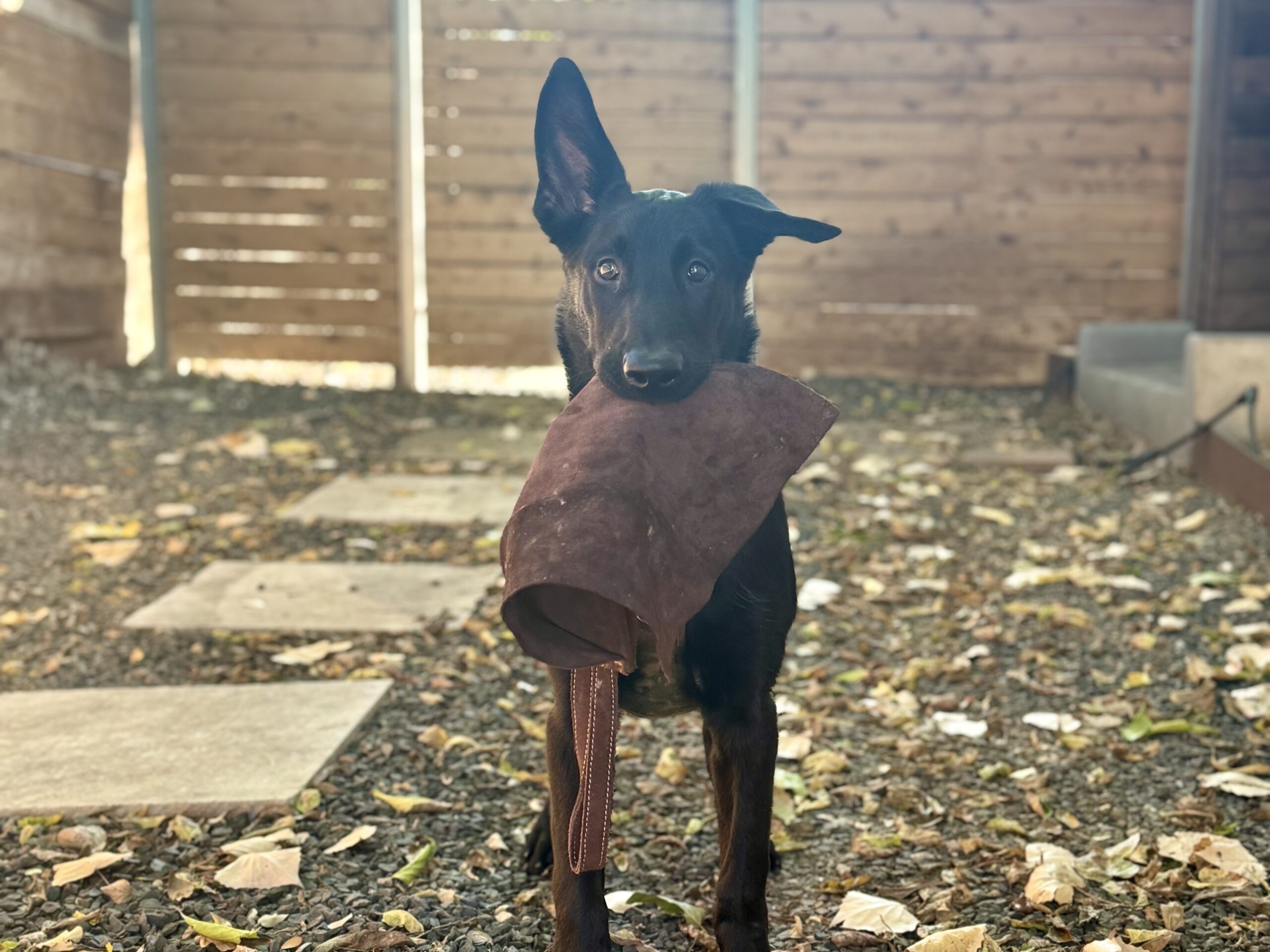
Personal protection, guard dog training, and bite sports with police and sport dog trainer Jeremy Sebree. Train in Del Valle, serving the Austin area.
First-time evaluation: $50.
Workshops: $325 per month for a two-day workshop with four protection training sessions and two obedience training sessions. Weekly bite night coming soon.
New dog? Start with an in-person evaluation. Booking an evaluation does not guarantee acceptance into protection training. The first-time evaluation is $50. Workshops are $325 per month.
Questions: hello@tractiondtc.com. No phone consultation is needed.

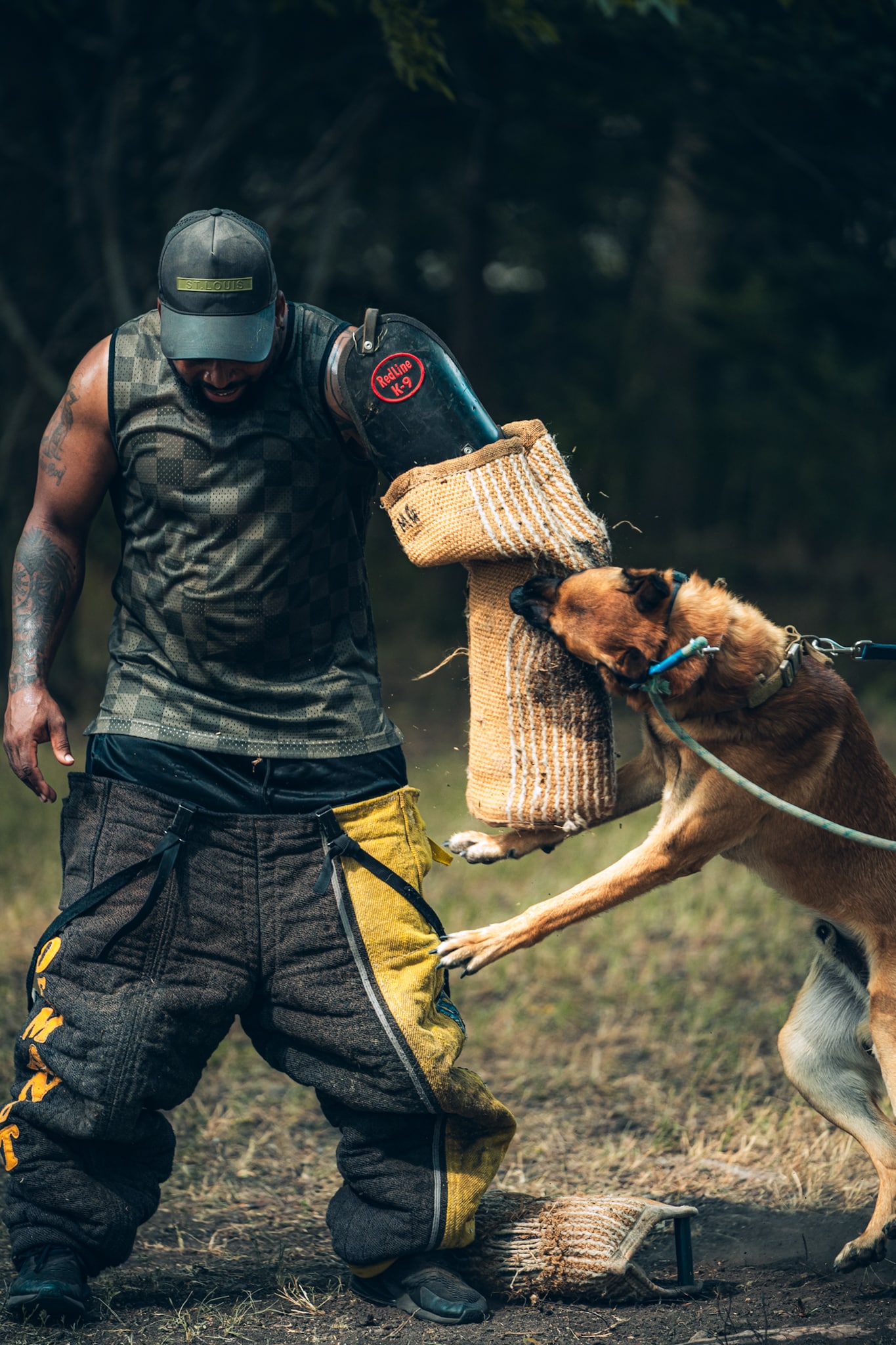
Power, confidence, and the drive to engage. When a dog loves this work, it is incredible to watch. But not every dog has the genetics for it.
Unlike teaching obedience commands, protection training depends heavily on what the dog brings to the work. We develop and channel their natural abilities. The dog has to want to engage, have the confidence and bravery to confront a person, and find the challenge rewarding.
For this reason, an in-person evaluation is required. We assess your dog’s confidence, drive, and willingness to engage. Those qualities determine which paths, if any, are suitable, from introductory bite work and sport foundations to more advanced protection training. We discuss the options after seeing your dog; we cannot map out what their training will look like beforehand.
The first evaluation may be quiet. Often, not much happens initially. Come with your dog, watch the training, and see whether the work catches their interest. If your dog isn’t used to busy new environments, they may need to observe and adjust before they’re comfortable.
Belgian Malinois, Dutch Shepherds, and German Shepherds are the breeds that most commonly take to this work. We also train Dobermans, Cane Corsos, Presa Canarios, Australian Shepherds, Rottweilers, and mixed breeds. The individual dog’s aptitude determines the path.
The first-time protection evaluation is $50. Open online booking, enter your contact details, and choose the protection training evaluation option available in the service menu. Share your dog’s age, breed or mix, training history, behavior concerns, and whether your goal is sport or personal protection.
The evaluation assesses suitability and an appropriate starting point. If you cannot find the appropriate service, email us before booking a different service.
Dogs already evaluated or already started in protection training can use our online booking portal to select their next available protection workshop. Workshops run Saturday and Sunday, 9 a.m. to approximately 1 p.m., with Jeremy Sebree visiting from St. Louis.
Published program price: $325 per month. Includes four protection sessions and two obedience sessions over two days. Confirm the selected service, price, availability, and booking terms in MoeGo before completing your reservation.
You’ll also meet members of the Full Grip Society PSA club at protection workshops. Let us know if you’re looking to join a club and compete!


Published workshop hours: 9 a.m. to approximately 1 p.m. each day. Confirm available dates in the online portal before booking. Owners may drop off and pick up their dogs or stay to watch.
Jeremy Sebree has trained the Chicago and St. Louis police dogs for over 20 years. He is an Expert Professional Dog Trainer certified by the Personal Protection Dog Association, a certified APPDA (American Patrol and Protection Dog Association) decoy, and owner/handler of multiple APPDA and PSA titled dogs.
Training for a suitable dog and handler with a personal protection goal. Foundations include confidence, sound bite mechanics, clear cues, obedience, and releasing on cue. More advanced work depends on the dog’s aptitude and reliable control.
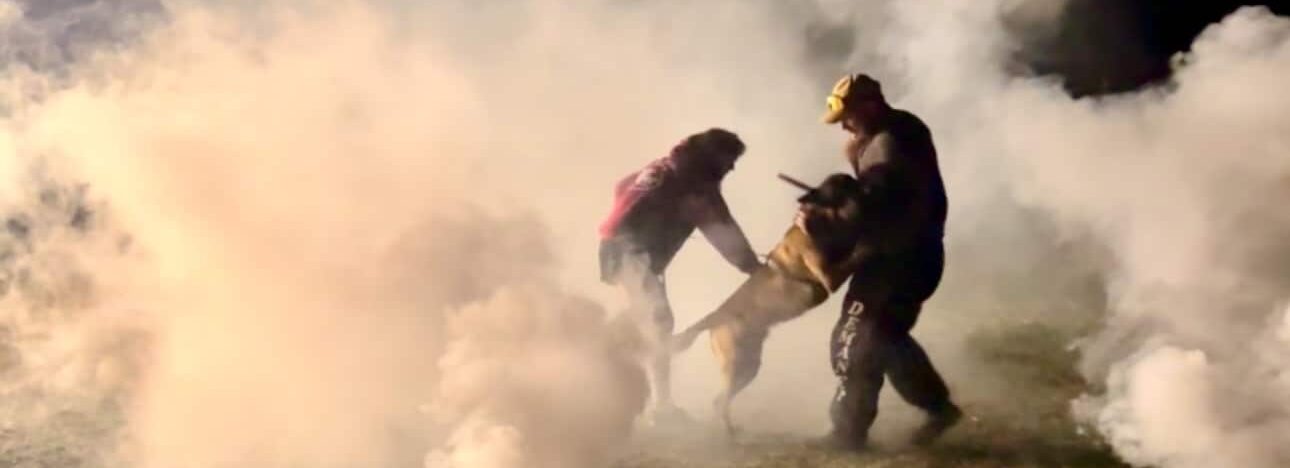
Interested in protection for your home or property? Bring that goal to the evaluation. Your dog’s natural confidence, drive, and willingness to engage determine how we can develop the work and which goals fit their abilities.
Sport training develops skills for structured competition. Sport performance and real-world protection are different goals. Discuss the distinction with the trainer before choosing a path.
Traction’s protection sports team, Full Grip Society, offers an additional competitive path for suitable dogs and committed owners. Club membership is by invitation with limited places; attending a workshop does not guarantee membership.
Work on the obedience foundation your dog needs through our Austin obedience training and advanced and off-leash training programs.
Personal protection demands an exceptional combination of natural ability, confidence, courage, and a balanced temperament. A dog must willingly engage a person while remaining neutral and controllable in everyday life. Enjoying bite work is a starting point; the evaluation helps determine how far that potential extends.
Bite sports offer another challenging path, combining protection work with highly technical obedience and other exercises.
The typical competitive pathway involves joining a club: a team of dogs and handlers who train together and prepare for trials. Our PSA team is Full Grip Society. Personal protection development can also take place through our monthly workshops, with the appropriate handling and obedience work maintained between visits.
Yes, monthly workshops can be enough for some dogs and goals. We have had dogs trial and earn titles with their protection work developed entirely through these workshops.
Protection sessions are short and purposeful. Rather than simply repeating commands, we gradually develop the dog’s natural drive, confidence, and willingness to engage. More frequent bite work is not automatically better.
The right frequency depends on the individual dog and the skills being developed; obedience, handling, and competition exercises may require additional practice between workshops.
Generally, no. A protection dog can also be an extremely friendly dog. Sociability and protective tendencies have a strong genetic component, alongside learning and experience. Protection training does not automatically make a friendly dog dislike people, and it does not automatically make a dog that dislikes people more sociable.
Every protection dog needs neutrality toward people: the ability to remain comfortable around others and largely ignore them in public. They do not need to greet everyone, but they do need to work calmly around ordinary activity. This is something that any dog can learn.
Protection training develops the dog’s ability to bite effectively. That is a skill the handler must understand and manage. For a dog already inclined to bite outside training, improved bite mechanics could increase the severity of an incident. That history matters when we evaluate the dog and choose a training path.
Personal protection adds another layer of responsibility. Unlike sport work in a structured training setting, real-world situations can be ambiguous. A dog may misinterpret an interaction as a threat or an invitation to engage. Training cannot eliminate that possibility.
A protection-trained dog needs a sharp, attentive handler who reads the dog, anticipates situations, and maintains reliable control. Obedience, releasing on cue, neutrality, and thoughtful management remain part of life with the dog.
See the power, athleticism, and teamwork that make protection training so compelling. Come to your evaluation ready to watch the dogs work and discover what interests your own dog.


If your dog is fearful, lower-drive, or simply uninterested in protection work, there are plenty of other ways to discover what they love. Dog sports give you a shared challenge, new skills to master, and a reason to get out and train together.
Start with Traction Rally, our rally obedience club and competitive team. Rally welcomes all breeds, sizes, and mixed breeds, with training that can start at your dog’s current level. You and your dog navigate a course of obedience challenges, build teamwork and confidence, and progress toward increasingly advanced skills and titles. Enjoy regular practices, meet other dog owners, and work toward goals together, whether you want a fun new activity or a competitive sport.
Our trainers have earned titles across a multitude of dog sports and would be happy to help you find your dog’s sport. We can help you explore options that suit their interests, confidence, and drive. For fearful dogs, we’ll help identify an appropriate starting point and environment.
Belgian Malinois, Dutch Shepherds, and German Shepherds most commonly take to this work. We also have Dobermans, Cane Corsos, Presa Canarios, Australian Shepherds, Rottweilers, and mixed breeds training with us. Genetics matter heavily, and dogs within the same breed can differ substantially. The evaluation assesses the individual dog’s confidence, drive, and willingness to engage.
If you’re interested in protection or bite sports, get your puppy started early, ideally at six to eight weeks with age-appropriate play and foundations. Genetics remain the foundation, and natural ability can emerge at any age, but starting young makes it easier to explore their drives and interests before they learn that barking, jumping, biting, and pulling are discouraged. Adult dogs may need more time to understand that those behaviors are encouraged within the training game. Starting early lets us develop that enthusiasm from the beginning.
No prior obedience training is needed to get started. Dogs with less obedience training may take to the game more readily because they are less concerned about following commands or whether barking, pulling, and biting are allowed. Reliable obedience is essential for a finished protection dog and for bite sports, but we develop that as training progresses. Bring your dog as they are; we’ll build the skills they need.
There is no fixed completion timeline. Progress depends on aptitude, confidence, consistency, goals, and the handler’s participation. This is an ongoing training program rather than a promise to turn any dog into a protection dog in a few sessions.
Be wary of programs that promise your dog will progress through protection levels on a fixed timeline. Protection training simply does not work that way. Sessions can follow a schedule, but a dog’s development cannot be put on a deadline. Their genetics, drive, confidence, and willingness to engage determine how far and how quickly they progress. No program can guarantee those qualities or promise a particular outcome within a set number of weeks.
We can explain the program, but the right path depends on seeing your dog work. Their confidence, drive, and willingness to engage determine which options are suitable. We discuss those options after the evaluation.
Training is in Del Valle in the Austin area. Confirm arrival instructions and the workshop location in your reservation before attending.
Protection training workshops include sessions over Saturday and Sunday. Owners may drop off their dogs or stay and observe. Email hello@tractiondtc.com before booking if your availability requires a different arrangement.
No. Book the in-person protection evaluation online through the online portal. For questions not answered here, email hello@tractiondtc.com.
Find out what your dog brings to the work. Come watch protection training, let us evaluate their confidence and drive, and discover which path fits them.
Already in the program? Select your returning-dog workshop in the online portal. Questions: hello@tractiondtc.com.